All roles/Deck and Bridge/Yacht Captain
Deck and Bridge
Yacht Captain
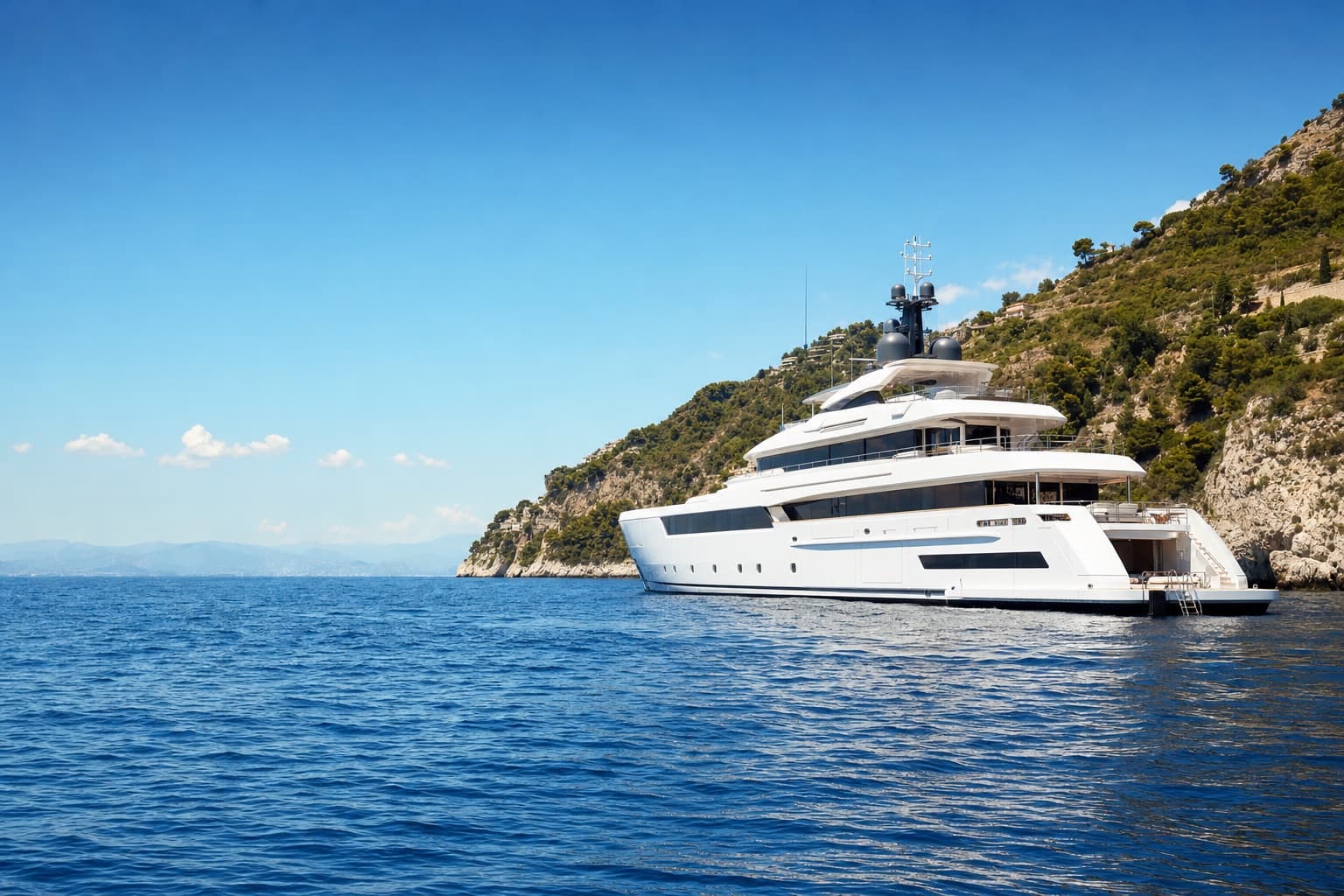
The captain is legally responsible for the yacht, its crew and its guests. You run the vessel safely, lead every department, manage the budget and deliver the owner's programme.
- Department
- Deck and Bridge
- Reports to
- Owner / Yacht Manager
- Yacht size
- 24m to 150m+
- Contract
- Permanent or rotation
- Starting pay
- €9,000 per month
What the job is
The captain is the Master under maritime law. You carry final responsibility for the safety of everyone on board, the condition of the vessel and compliance with flag state, the ISM Code and the ISPS Code. That means passage planning, watch standards, drills, weather decisions and the call on whether a tender run or an anchorage is safe. When something goes wrong at 03:00, the crew wake you, and the decision is yours.
Command is only part of it. You are also the general manager of a small business. You set and track the annual budget, approve invoices, plan the season, book berths and shipyards, and work with the management company on crew contracts, insurance and surveys. On a refit you sit across the table from the yard. On charter you work with the broker and the preference sheet to make sure the itinerary is realistic and the yacht is ready.
The rest is people. You hire, appraise and sometimes dismiss crew, keep heads of department working together and set the tone of life on board. You are the owner's main point of contact, often by WhatsApp late at night, and you translate their wishes into plans the crew can deliver. Good captains are calm, organised and straight with owners about what is safe, legal and affordable.
What makes a good one
- Safe navigation and shiphandling
- Crew leadership and discipline
- Budget and financial control
- Owner and broker communication
- ISM and ISPS compliance
A day in the life
- 06:30Check the overnight anchor watch log, wind and swell forecast and anchor position. Agree with the chief officer that the bay stays comfortable for breakfast.
- 07:30Morning meeting with heads of department. Run through guest timings, the lunch stop, tender runs and a restaurant booking ashore.
- 08:30Emails and calls with the management company and the broker. Approve a fuel order and confirm the berth in Palma for changeover.
- 10:00Greet the guests on the aft deck and talk through the day's plan. The principal asks to move to a quieter cove, so you check depth, holding and the posidonia rules.
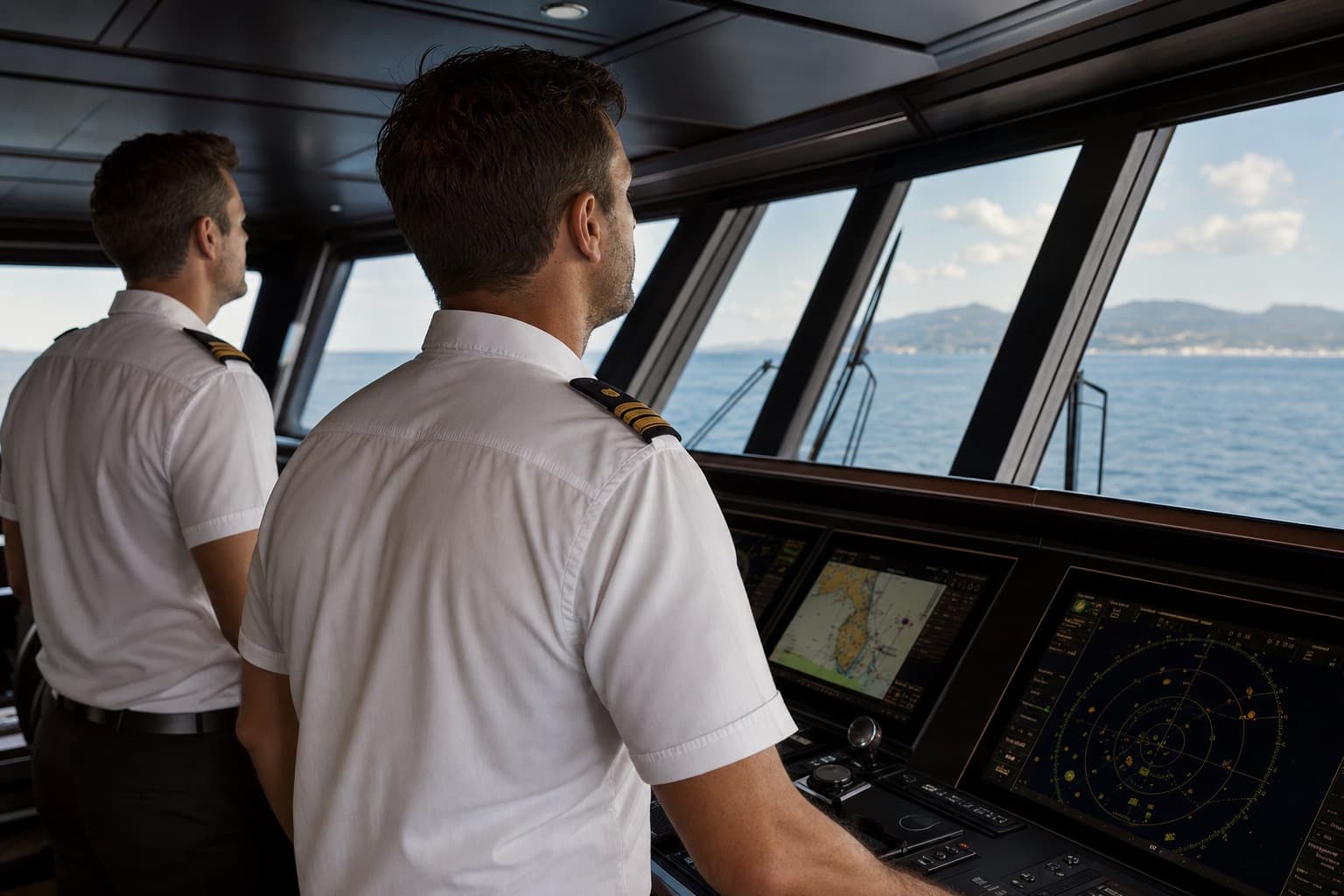
- 11:30On the bridge for the short passage. You con the yacht into the anchorage and supervise the anchoring while the deck team launch toys.
- 13:30Walk the yacht. Check the swim platform, the jet ski safety briefing and a fault the chief engineer flagged on a stabiliser fin.
- 15:30Paperwork in your office: crew hours of rest records, the charter expense sheet for the APA and a drill plan for next week.
- 19:30Oversee the evening tender run ashore for dinner. Confirm radio checks, life jackets and the return pick up time with the tender driver.
- 22:30Final round with the officer of the watch. Review night orders, anchor alarm settings and the forecast before handing over.
Pay by country
Monthly salary for a captain on a 40m to 60m motor yacht. Smaller yachts pay around €6,500 to €8,500, while 80m+ commands often pay €15,000 to €25,000 or more. Captains usually share in charter tips, and rotation posts are often paid at the same monthly rate for time on board.
- France and Monaco
- €9,000 – 13,000
- Spain
- €9,000 – 13,000
- Italy
- €8,500 – 12,500
- United Kingdom
- £7,800 – 11,300
- USA (Florida)
- US$10,000 – 14,500
- Caribbean
- US$10,000 – 14,500
- UAE
- AED 37,000 – 53,000
- Australia
- A$15,000 – 22,000
- New Zealand
- NZ$16,500 – 24,000
Required
- Master (Yacht) 500gt or 3000gt
- STCW Basic Safety Training
- ENG1 medical
- GMDSS GOC
- Medical Care
- HELM (Management)
- Ship Security Officer
- ECDIS
- Advanced Fire Fighting
Recommended
- Master (Yacht) 3000gt
- Type specific ECDIS
- RYA Yachtmaster Ocean
- Proficiency in Survival Craft
- RYA Powerboat Level 2
Visas
- Schengen
- US B1/B2
- C1/D
- Australian MCV
Where it leads
Yacht Captain jobs open now
Questions crew ask
How long does it take to become a yacht captain?
Most captains spend 8 to 12 years working up from deckhand through officer roles. Sea time requirements for the MCA tickets set the minimum pace, and owners usually want to see a strong record as chief officer first.
Do I need Master 3000gt, or is 500gt enough?
A Master (Yacht) 500gt lets you command yachts up to 500gt, which covers many yachts up to around 45m to 50m. Larger yachts need Master (Yacht) 3000gt, and some owners ask for it even on smaller yachts.
Can captains work rotation?
Yes. Many yachts over 50m offer rotation such as 2:2 or 3:1 months, often sharing the command with a second captain. Smaller yachts usually want one permanent captain.