All roles/Engineering/Electro-Technical Officer (ETO)
Engineering
Electro-Technical Officer (ETO)
The ETO keeps every electrical, electronic and IT system on board working, from switchboards and navigation electronics to guest Wi‑Fi and cinema rooms, so the yacht runs safely and guests never notice a fault.

- Department
- Engineering
- Reports to
- Chief Engineer
- Yacht size
- 60m to 150m+
- Contract
- Rotation or permanent
- Starting pay
- €6,000 per month
What the job is
The Electro-Technical Officer looks after everything on board that runs on electricity or data. That means main switchboards, generators' control systems, shore power converters, UPS units, alarm and monitoring systems, navigation electronics on the bridge, and the guest side: satellite TV, Wi‑Fi, lighting control, audio visual and the owner's office. On a large yacht you are the person the whole crew calls when a screen goes dark or a breaker trips.
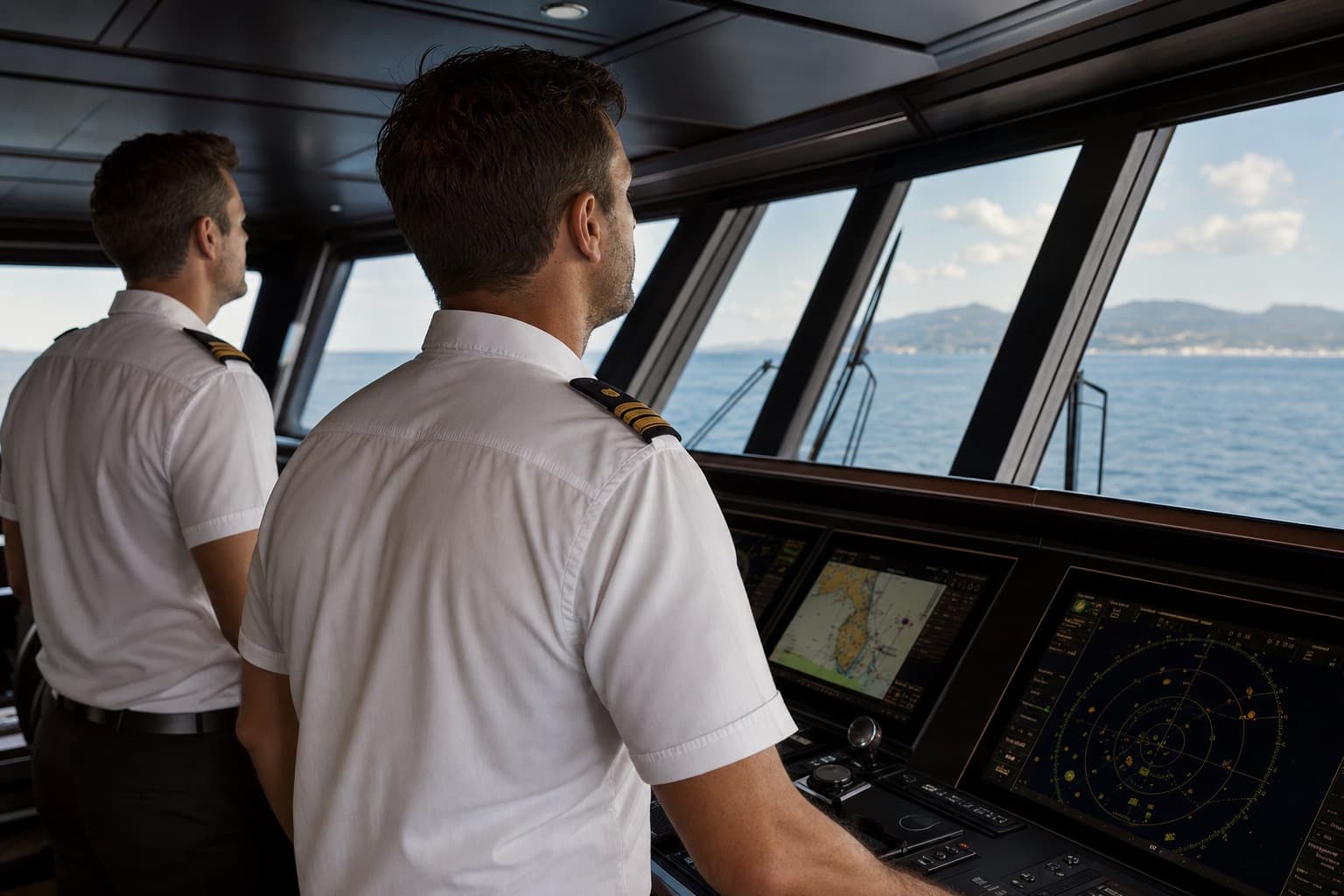
You sit in the engineering department and report to the Chief Engineer, but your work crosses every department. The captain needs the radar, ECDIS and VSAT working. The chief steward needs the cabin control panels and laundry machines running. Guests want the cinema and streaming to work at 23:00 at anchor. Much of the job is planned maintenance, fault finding and keeping drawings and records up to date, with a fair amount of cyber security now part of the role.
On smaller yachts these tasks are split between the engineers and an AV/IT Officer. From around 60m, and almost always above 80m, the systems are complex enough to need a dedicated ETO. You will spend time in the engine room, the bridge, crew mess cupboards full of network racks, and guest cabins. Shipyard periods and refits are busy, with contractors to supervise and new systems to commission and learn.
What makes a good one
- Electrical fault finding
- Marine power distribution
- Network and IT administration
- AV and control systems
- Calm, clear communication with guests
A day in the life
- 07:00Engine room rounds with the duty engineer. Check generator loads, switchboard readings, battery chargers and the alarm log from overnight.
- 07:45Crew breakfast, then the morning engineering meeting with the Chief Engineer to agree the day's jobs and any guest requests.
- 08:30VSAT and 4G router checks, network health dashboard, and backups of the bridge and owner's office systems.
- 10:00Fault find a flickering lighting circuit in a guest cabin while the guests are on the beach club, working quietly with the stewardess on duty.
- 12:30Lunch in the crew mess, then a call with a Crestron contractor ashore to plan a software update during the next port stay.
- 14:00Planned maintenance on the stabiliser control cabinet and thermal imaging of the main switchboard connections, logged in the maintenance system.
- 16:30Help the deck team rig the outdoor cinema screen and sound for the evening, testing the wireless links to the sundeck.
- 19:30On call during guest dinner. Fix a tablet that has lost connection to the entertainment system in the main saloon.
- 22:00Final check of the network and power systems, hand over to the night watch and switch the radio to on call.
Pay by country
Monthly salary for a full time ETO on 60m+ yachts. Higher end on 100m+ yachts and with full STCW III/6 CoC. Rotational posts often pay similar monthly rates. Charter tips are shared on charter yachts and can add a month's pay or more per season.
- France and Monaco
- €6,500 – 9,500
- Spain
- €6,500 – 9,500
- Italy
- €6,500 – 9,500
- United Kingdom
- £5,500 – 8,000
- USA (Florida)
- US$7,000 – 10,500
- Caribbean
- US$7,000 – 10,500
- UAE
- AED 26,000 – 38,000
- Australia
- A$10,500 – 15,500
- New Zealand
- NZ$11,500 – 17,000
Required
- STCW Basic Safety Training
- ENG1 medical
- PDSD
- Electro-Technical Officer CoC (STCW III/6) or recognised electrical trade qualification
Recommended
- High Voltage training
- HELM (Operational)
- Advanced Fire Fighting
- Medical First Aid
- Crestron certification
- Cisco CCNA
Visas
- Schengen
- US C1/D
- US B1/B2
Where it leads
- Engineering Cadet
- Electrical Engineer
- Electronics Engineer
- Electro-Technical Officer (ETO)
- Technical Yacht Manager
Electro-Technical Officer (ETO) jobs open now
Questions crew ask
Do I need an ETO Certificate of Competency to get hired?
On larger commercially coded yachts the STCW III/6 ETO CoC is increasingly expected. Many yachts still hire qualified electricians or electronics engineers with strong IT skills, especially if you have marine or high voltage experience.
Can I move into this role from IT or AV work ashore?
Yes, but you will usually start as an AV/IT Officer or Electrical Engineer to learn marine systems first. Get your STCW Basic Safety Training and ENG1 before applying.
Is the job on rotation?
On yachts over about 80m, rotation such as 2:2 or 3:1 months is common. Smaller yachts more often offer permanent contracts with set leave.