All roles/Engineering/Oiler / Wiper
Engineering
Oiler / Wiper
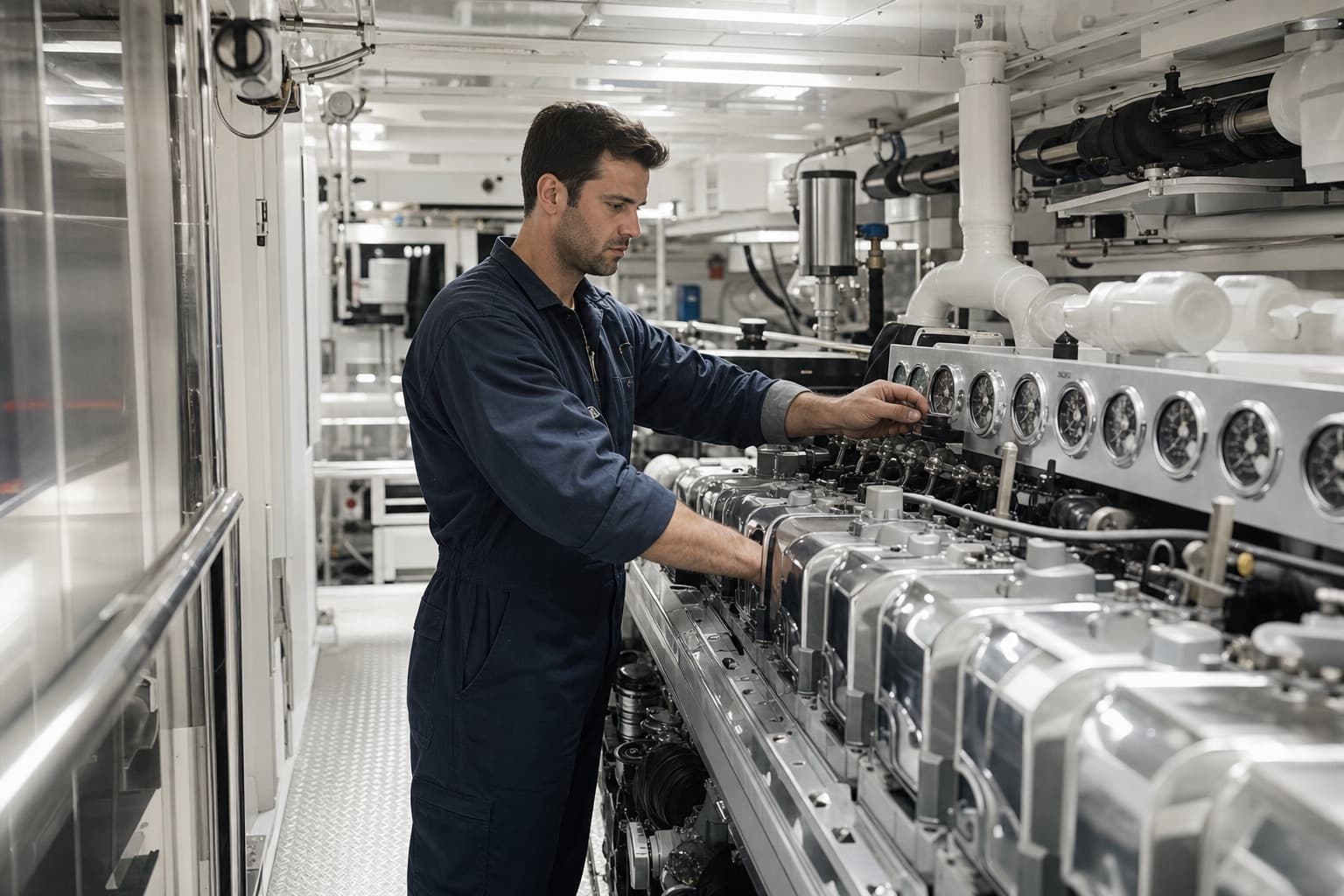
The oiler or wiper keeps the engine room clean, checked and running on large yachts, doing rounds, cleaning bilges and helping engineers with maintenance so machinery stays reliable and the officers can focus on bigger jobs.
- Department
- Engineering
- Reports to
- Second Engineer
- Yacht size
- 70m+
- Contract
- Permanent, sometimes rotation
- Starting pay
- €2,500 per month
What the job is
The oiler or wiper is the entry rating in the engine department of a large yacht. You keep the engine room, machinery spaces and workshop spotless, wipe down engines and generators, clean bilges and strainers, and carry out routine checks on oil levels, temperatures and pressures. On yachts over about 80m with a team of five or more engineers, this is the role that frees the officers to plan maintenance and deal with faults.
Much of the work is cleaning, and it matters. A clean engine room shows leaks early, keeps fire risk down and passes flag and class surveys. You also help the engineers with planned maintenance: changing filters and impellers, draining and refilling oil, lifting parts, labelling spares and keeping stores in order. You log readings during rounds and report anything unusual straight away rather than guessing.
You learn the plant by being in it every day. Good oilers ask questions, follow permits to work and lockout procedures, and quickly understand fuel, lube oil, cooling and sewage systems. Many come from a trade such as diesel mechanics, plumbing or electrical work. With sea time and AEC courses, the role leads to Motorman or Junior Engineer and on towards MCA Yacht engineering tickets.
What makes a good one
- Thorough cleaning and housekeeping
- Basic mechanical aptitude
- Safe use of tools and lockout
- Accurate log keeping
- Working in heat and noise
A day in the life

- 07:00Join the morning engine room meeting with the Second Engineer to hear the day's jobs and any overnight alarms.
- 07:30Do machinery rounds with the duty engineer, checking generator oil levels, coolant, sea water strainers and bilge levels, and logging readings.
- 09:00Clean the bilges under the main engines and wipe down generators that run all day at anchor to keep the guest areas powered.
- 11:00Help the Third Engineer change fuel filters on a generator, then clean the separator room.
- 13:00Crew lunch in the mess, then a short break in your cabin.
- 14:00Sort the spares delivery in the technical store, label parts and update the inventory with the engineer.
- 16:00Assist the deck team by refuelling a tender and checking the jet ski oil before the evening guest run.
- 18:00Final round of the engine room, empty rag bins, tidy the workshop and hand over to the night duty engineer.
Pay by country
Monthly, tax free for most crew, on 70m+ yachts. Food, accommodation, uniform and flights usually included. Charter yachts add tips, often €1,000 – 3,000 a season for engine crew.
- France and Monaco
- €2,500 – 3,200
- Spain
- €2,500 – 3,200
- Italy
- €2,500 – 3,200
- United Kingdom
- £2,150 – 2,750
- USA (Florida)
- US$2,700 – 3,500
- Caribbean
- US$2,700 – 3,500
- UAE
- AED 9,900 – 12,800
- Australia
- A$4,200 – 5,400
- New Zealand
- NZ$4,600 – 5,900
Required
- STCW Basic Safety Training
- ENG1 medical
- PDSD
Recommended
- AEC 1
- AEC 2
- Engine Room Watch Rating (STCW A-III/4)
- Trade qualification in diesel, mechanical or electrical work
- Advanced Fire Fighting
- RYA Powerboat Level 2
Visas
- Schengen visa
- US B1/B2 or C1/D
- Australian MCV
Where it leads
Oiler / Wiper jobs open now
Questions crew ask
Do I need engineering experience to get hired as an oiler?
Not always, but it helps a lot. Captains and chief engineers favour candidates with a trade background in diesel mechanics, plumbing or electrical work, plus STCW and ENG1.
How do I move up from oiler to engineer?
Build documented sea time, complete AEC 1 and 2, and keep a record of the work you do. That leads to Motorman or Junior Engineer and towards the MCA Y4 ticket.
Is it all cleaning?
Cleaning is a big part of it, especially early on. You also do rounds, log readings and help with maintenance, and the share of technical work grows as the engineers trust you.