All roles/Engineering/Rotational Engineer
Engineering
Rotational Engineer
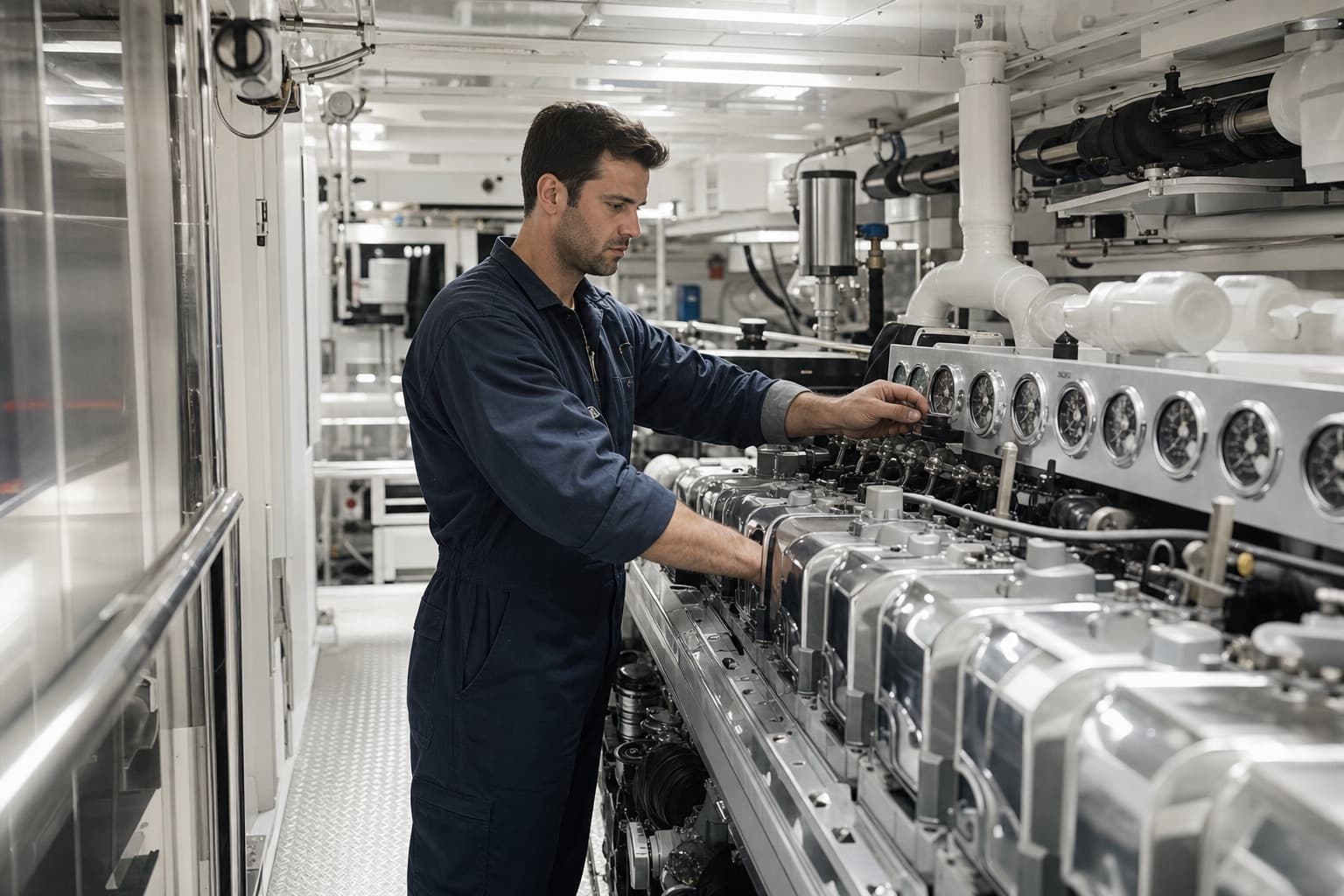
A rotational engineer keeps a superyacht's machinery running on a shared contract, working set periods on board and handing over to a back-to-back colleague so the engine room never loses continuity.
- Department
- Engineering
- Reports to
- Chief Engineer
- Yacht size
- 50m to 150m+
- Contract
- Rotation
- Starting pay
- €6,000 per month
What the job is
A rotational engineer does the same engineering job as permanent crew, but shares the position with a back-to-back colleague. You work a set period on board, often 10 weeks on and 10 off or two months on and two off, then hand over and fly home. While on, you run the machinery, keep planned maintenance up to date and stand duty. While off, you are fully off, which is why rotation is the most sought after contract in yacht engineering.
Most rotational engineers sit at Second or First Engineer level on yachts of 50m and above, where the owner can fund two people for each post. The daily work covers generators, main engines, watermakers, sewage plant, HVAC, hydraulics, stabilisers and tenders, all logged in the planned maintenance system. You answer to the Chief Engineer and pick up exactly where your opposite number left off, so you inherit their jobs and they inherit yours.
The handover is what separates good rotational engineers from average ones. A clear written handover covers open defects, parts on order, running hours, contractors booked and anything odd you noticed in the engine room. Captains and chief engineers hiring for rotation want people who finish what they start, document properly and leave the systems in better shape than they found them. On a complex yacht, continuity depends on it.
What makes a good one
- Thorough written handovers
- Diesel engine and generator maintenance
- Planned maintenance system discipline
- Fault finding on hydraulics and HVAC
- Managing contractors and permits to work
A day in the life

- 07:30Arrive on board from the airport, drop your bag in the cabin and change into overalls. Sit down with the outgoing engineer and read through their written handover notes.
- 08:15Joint walk round the engine room. You check both generators, the watermakers and the sewage plant together, and go through the open defect list line by line.
- 09:30Morning rounds on your own. Fluid levels, bilges, temperatures and pressures, with readings entered into the planned maintenance system.
- 11:00The outgoing engineer leaves for the airport. You take over a weeping hydraulic hose on the starboard stabiliser and confirm the replacement part is arriving tomorrow.
- 13:00Crew lunch in the mess. A quick catch up with the Chief Engineer on the programme for the next ten weeks, including a yard period in November.
- 14:00Meet the air conditioning contractor booked by your colleague. Issue the permit to work, isolate the chiller and supervise the service.
- 16:30Sound the fuel tanks and plan a transfer ahead of next week's charter. Check the tender engines and top up the jet ski fuel.
- 18:30Evening rounds, then start your own running handover log so nothing is lost when you rotate off again.
- 20:00Duty engineer for the night. You stay on board, carry the radio and do a late round of the engine room before turning in.
Pay by country
Monthly salary for a rotational Second or First Engineer holding Y4 to Y2 on a 50m to 100m yacht. Most rotational contracts pay year round, some pay only for time on board. Charter tips apply when on board during charter.
- France and Monaco
- €6,000 – 9,500
- Spain
- €5,800 – 9,000
- Italy
- €5,800 – 9,000
- United Kingdom
- £5,100 – 8,000
- USA (Florida)
- US$6,500 – 10,500
- Caribbean
- US$6,500 – 10,500
- UAE
- AED 24,000 – 38,000
- Australia
- A$10,000 – 16,000
- New Zealand
- NZ$11,000 – 17,500
Required
- STCW Basic Safety Training
- ENG1 medical
- MCA Yacht engineering ticket, Y4 or higher
- AEC 1 and 2
- Advanced Fire Fighting
- Proficiency in Survival Craft
- Medical First Aid
Recommended
- MCA Y3 or Y2
- HELM (Operational)
- PDSD
- RYA Powerboat Level 2
- Engine manufacturer courses
Visas
- Schengen
- US C1/D
- US B1/B2
- Australian MCV
Where it leads
Rotational Engineer jobs open now
Questions crew ask
What rotations are most common for engineers?
10 weeks on and 10 off, two months on and two off, and three months on and three off are the usual patterns. Some yachts run unequal rotations, such as two on and one off, at a higher day rate.
Do I get paid during my time off?
On most rotational contracts, yes, you receive the same salary every month all year. Some yachts pay only for days on board, so check the contract before you sign.
How do I get a rotational position?
Most engineers earn rotation after proving themselves on a permanent contract, usually at Second Engineer level or above with a Y3 or Y2. Larger yachts are far more likely to offer it, and a solid reference from a Chief Engineer helps more than anything.