All roles/Engineering/Motorman
Engineering
Motorman
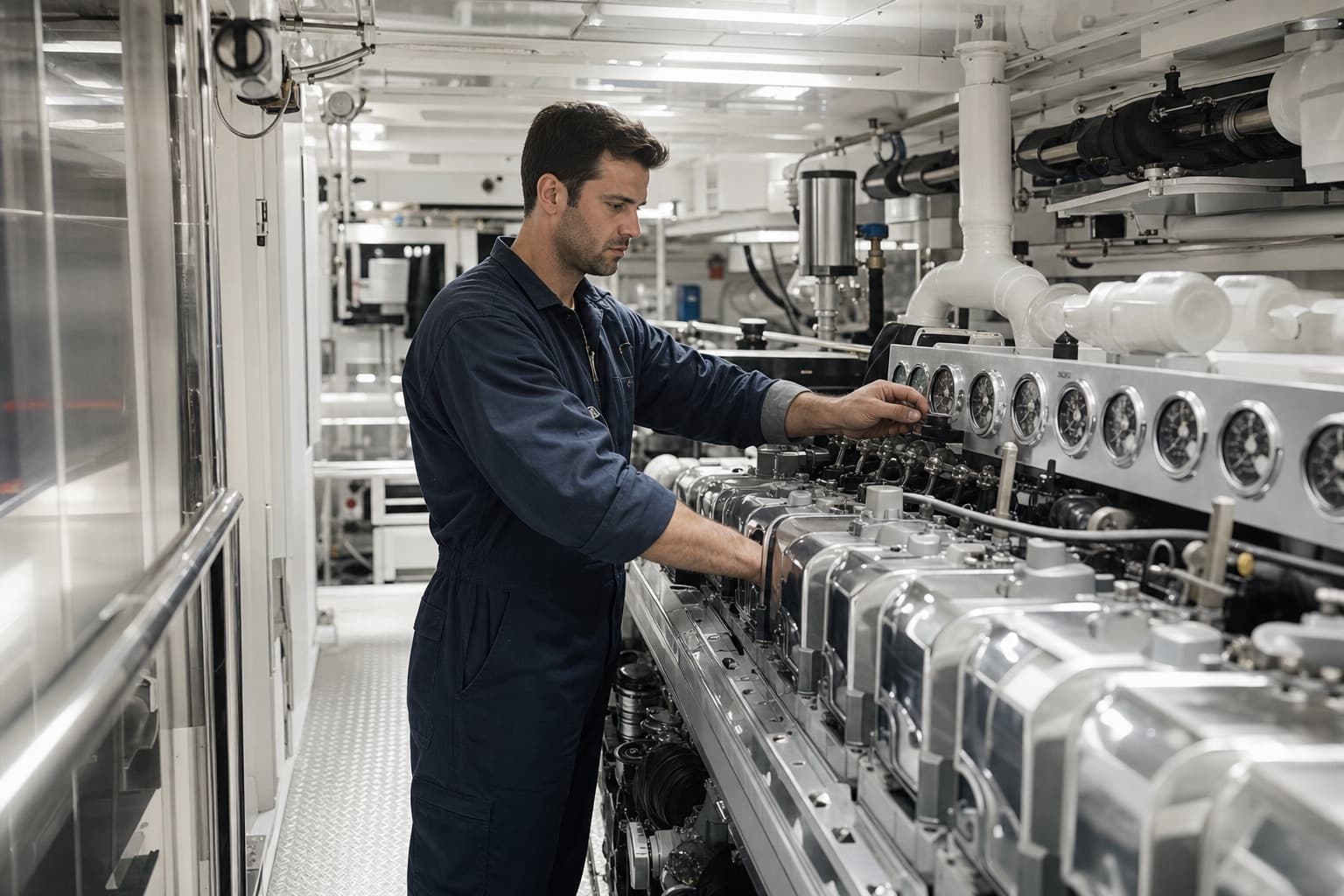
The motorman keeps the engine room of a large yacht clean, checked and running, doing rounds, routine maintenance and hands-on jobs so the engineers can focus on the systems that need a ticket.
- Department
- Engineering
- Reports to
- Second Engineer
- Yacht size
- 70m+
- Contract
- Permanent or rotation
- Starting pay
- €2,800 per month
What the job is
A motorman is an engine room rating. On yachts over about 70m the engineering team is big enough to need someone whose job is the hands-on work: daily rounds, oil and filter changes, bilge cleaning, painting, fetching parts and keeping the spaces spotless. You work under the Second Engineer and Chief Engineer, following the planned maintenance system and their job lists. It is practical, physical work in a hot, loud space, and on a well run yacht the engine room is kept as clean as the guest areas.
Rounds are the core of the job. You check levels, pressures and temperatures on main engines, generators, compressors, watermakers and sewage plant, log the readings and report anything odd before it becomes a breakdown. On passage you may stand watch with an engineer, and at anchor you help keep generators and hotel systems running for guests. Between rounds you strip and clean purifiers, change impellers, service pumps, top up chemicals and help with bunkering and waste oil transfers.
Most motormen come from a mechanical trade, a merchant navy rating background or a few seasons as a yacht deckhand who moved below. The role is the clearest way into yacht engineering without a degree. Use the time to log sea service, take AEC 1 and 2 and work towards your Y4. Engineers notice a motorman who asks questions, keeps a tidy workshop and can be trusted with a job alone, and that is who gets the Junior or Third Engineer berth when it opens.
What makes a good one
- Confident with hand and power tools
- Reading gauges and keeping accurate logs
- Routine pump and filter maintenance
- Working cleanly in hot, tight spaces
- Following a planned maintenance system
A day in the life

- 07:00Engine room rounds on the running generators, watermakers and sewage plant. Log readings and note a slow leak on a seawater pump seal.
- 07:45Morning meeting in the ECR with the Second Engineer. Agree today's planned maintenance tasks and the guest programme for tenders and toys.
- 08:30Change fuel and oil filters on the standby generator and record hours in the maintenance system.
- 10:30Strip and clean the fuel oil purifier bowl, then reassemble and run it up with the Third Engineer watching.
- 12:30Crew lunch, then a second set of rounds and a check of tank soundings.
- 13:30Help the deck team fuel the tenders and jet skis, then rinse and flush the outboards after the morning run.
- 15:00Replace the seal on the leaking seawater pump. Clean and degrease the bilge underneath and touch up the paint.
- 17:30Restock the engine room store, update the parts list and wipe down the workshop.
- 19:00Final rounds and handover to the duty engineer before dinner. On call overnight if a generator alarm needs a second pair of hands.
Pay by country
Monthly, tax free for most nationalities on yachts 70m+, paid in EUR or USD whatever the flag. Charter tips apply on charter yachts and are usually shared equally with the crew.
- France and Monaco
- €2,800 – 3,600
- Spain
- €2,700 – 3,500
- Italy
- €2,700 – 3,500
- United Kingdom
- £2,400 – 3,100
- USA (Florida)
- US$3,000 – 4,000
- Caribbean
- US$3,000 – 4,000
- UAE
- AED 11,000 – 14,500
- Australia
- A$4,600 – 6,000
- New Zealand
- NZ$5,000 – 6,600
Required
- STCW Basic Safety Training
- ENG1 medical
- PDSD (Proficiency in Designated Security Duties)
Recommended
- AEC 1
- AEC 2
- Engine Room Watch Rating
- Mechanical or marine engineering trade qualification
- RYA Powerboat Level 2
- Food Safety Level 2
Visas
- Schengen
- US B1/B2
- C1/D
- Australian MCV
Where it leads
Motorman jobs open now
Questions crew ask
Do I need engineering experience to become a motorman?
Most yachts want some mechanical background, such as a trade apprenticeship, merchant navy rating time or work on cars, plant or boats. A deckhand who has helped the engineers can also make the move.
How long until I can become an engineer?
With AEC 1 and 2 and enough logged sea service, many motormen gain their Y4 and step up to Junior or Third Engineer within two to four years. A supportive Chief Engineer makes a big difference.
Is a motorman the same as an oiler?
They are close. On yachts the motorman usually has more responsibility and can be left with jobs alone, while an oiler or wiper is the entry level rating focused on cleaning and basic tasks.